Music Activities for Toddlers and Preschoolers
Simple, joyful music activities for children aged one to five: singing, movement, homemade instruments, listening games and a weekly plan, with tips for parents who think they cannot sing.
In this guide
Toddlers and preschoolers are natural musicians. They bounce to beats, bang on pots, hum while they play and ask for the same song again and again. You do not need training or instruments to nurture this. A few minutes of musical play each day builds a sense of rhythm, pitch, language and joy that prepares children for lessons later.
Why music matters at this age
In the early years, music supports language through rhymes and songs, coordination through movement, and emotional connection through shared singing. It also builds the musical foundations, beat and pitch, that make formal lessons easier later. Most importantly, it is fun and brings families together.
Singing activities
- Daily songs: a wake-up song, a tidy-up song, a bath song and a bedtime song give structure to the day.
- Action songs: songs with gestures help toddlers join in before they can sing the words.
- Name songs: put your child’s name into familiar tunes. Children love hearing themselves in songs.
- Fill the gap: stop before a word and let your child sing it.
Do not worry about your voice. Children care about your attention, not your pitch. See singing with babies and toddlers.
Movement activities
- Marching band: march around the room to a steady beat, then tiptoe for quiet music.
- Scarf dancing: wave scarves slowly for gentle music and fast for lively music.
- Statues: dance while music plays, freeze when it stops.
- Animal moves: elephants stomp to low sounds, birds flutter to high ones.
Homemade instruments
| Instrument | How to make it | Safety note |
|---|---|---|
| Shaker | Dried rice or pasta sealed in a plastic bottle | Tape the lid firmly; supervise small children |
| Drum | Upturned pot or plastic tub with a wooden spoon | Keep volume reasonable for little ears |
| Rain stick | Cardboard tube with foil coil and rice, ends sealed | Seal ends well |
| Rubber band guitar | Rubber bands stretched over an open box | Adult supervision |
| Chime bottles | Glass or plastic bottles with different water levels, tapped gently | Use plastic for young children |
Listening activities
- Sound walk: go for a walk and name every sound you hear.
- Guess the sound: hide an object and shake it; your child guesses what it is.
- Music and mood: play happy, sad, sleepy and exciting music and ask how each one feels.
- Instrument stories: listen to pieces where instruments represent characters and talk about them.
A simple weekly plan
| Day | Activity (5–15 minutes) |
|---|---|
| Monday | Action songs and name songs |
| Tuesday | Make a shaker, then play along to a favourite song |
| Wednesday | Scarf dancing: fast and slow, loud and quiet |
| Thursday | Sound walk outside |
| Friday | Kitchen band concert for the family |
| Weekend | Listen to music together; try a new style or instrument |
Should preschoolers have lessons?
Group music classes for young children can be wonderful, offering songs, movement and social fun. Some specialist methods start piano or violin at three or four with a parent involved. But formal individual lessons are not necessary at this age. Musical play at home builds the foundations that make lessons enjoyable later. See what age to start music lessons.
Tips for parents
- Repeat favourites. Repetition is how young children learn.
- Follow their lead. If they invent a song, join in.
- Protect their ears. Keep volume moderate.
- Make instruments accessible. A basket of shakers and drums invites play.
- Keep screens as a side dish. Real singing and playing together matters most.
For age-specific ideas every week, try the Kids Music Activity Planner AI.
Making music part of everyday routines
The easiest way to give young children a rich musical life is to weave music into things you already do. Sing while you change nappies, cook, walk to the park or wait in a queue. Make up silly songs about what you are doing: “This is the way we put on our shoes” works for almost any task. Tap the rhythm of words as you say them, and clap along to music in the car. These small moments add up to hours of musical experience every week, without any extra time in your day.
Visit live music whenever you can. Free outdoor concerts, family concerts, buskers and community bands show children that music is made by real people with real instruments. Let them watch the players up close, ask questions afterwards and try copying what they saw at home with their own homemade instruments.
Finally, notice what your child is drawn to. Some children love rhythm and movement, others singing, others the sound of particular instruments. These early preferences can guide your choice of classes and, later, a first instrument. See the best first instrument for a child.
Frequently asked questions
What real instruments suit toddlers?
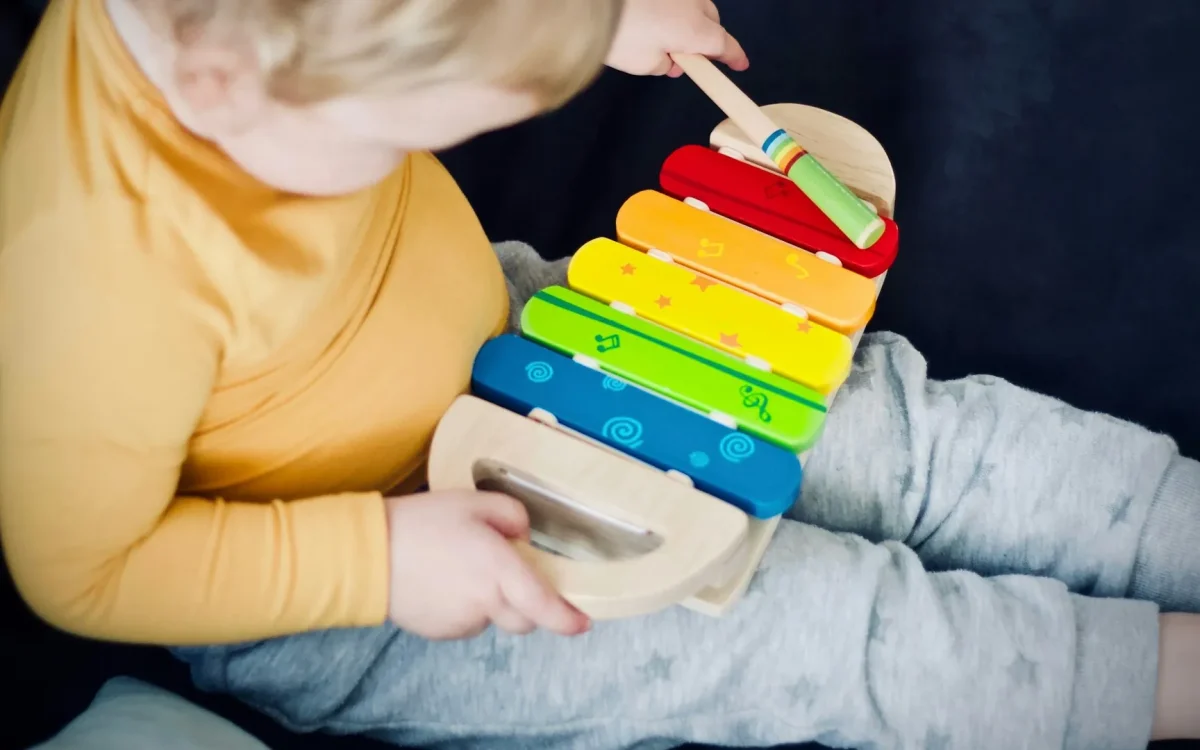
Sturdy percussion such as shakers, hand drums, tambourines and xylophones made for young children. See xylophones and glockenspiels for kids.
My toddler only wants the same song. Is that okay?
Yes. Repetition helps children learn rhythm, words and melody. Gradually introduce new songs alongside favourites.
How much music activity is enough?
A few short moments each day, woven into routines, is plenty.
Questions and notes