Steps, Skips and Melody Shapes: Read Music Faster
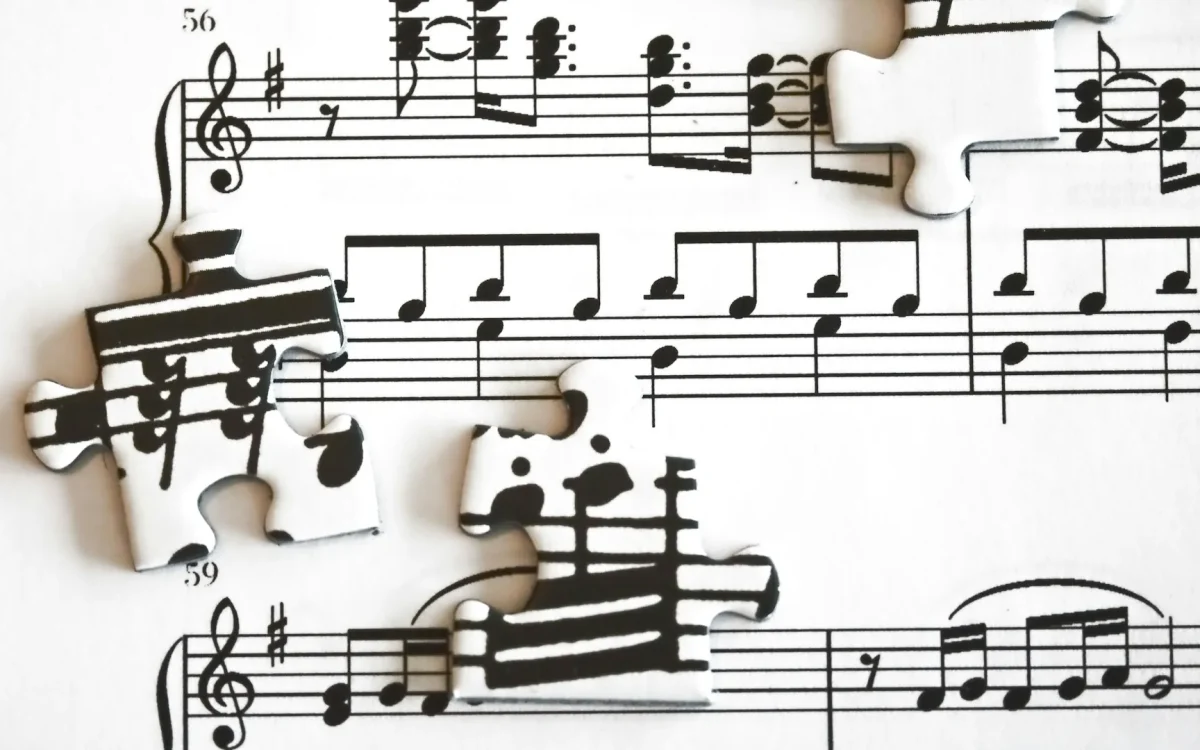
Fluent readers do not name every note. They see steps, skips, leaps and repeated notes. How intervallic reading works, how to spot melody shapes and patterns, and exercises to read…
Learn to read music and understand the basics: notes, rhythm, clefs, scales, key signatures and symbols, with games for kids.
14 guides
Fluent readers do not name every note. They see steps, skips, leaps and repeated notes. How intervallic reading works, how to spot melody shapes and patterns, and exercises to read…
A child-friendly guide to note values: semibreves, minims, crotchets and quavers (whole, half, quarter and eighth notes), rests, dotted notes, counting words, clapping games and fun ways to practise.
Learn the treble clef notes quickly with memory phrases, landmark notes, steps and skips, ledger lines and games. Practical tricks for children and adults that build real reading speed.
Flashcards are one of the quickest ways to learn note names, symbols, key signatures and rhythms. How to make or choose cards, practise in short bursts, use spaced repetition and…
Key signatures tell you which notes are sharp or flat throughout a piece. How to read them, the order of sharps and flats, quick tricks to name the key, major…
What sharps, flats and naturals do, how to find them on piano and guitar, semitones and tones, enharmonic notes, accidentals that last for a bar, and key signatures, all explained…
A one-week plan to learn the basics of reading music: the staff, treble and bass clefs, note values, rests, time signatures, sharps and flats, and reading your first simple melody.
Fun clapping games that build a strong sense of rhythm: echo clapping, name rhythms, pass the beat, rhythm cards, body percussion and games for the classroom, family or solo practice.
The bass clef often feels harder than treble, but a few tricks make it simple. Lines and spaces, memory phrases, landmark notes, the link with treble clef, and practice ideas…
What the two numbers at the start of music mean. A friendly explanation of 4/4, 3/4 and 2/4 time, strong and weak beats, counting, conducting patterns, compound time like 6/8,…
The major scale is the foundation of most Western music. Its pattern of tones and semitones, how to build it on any note, solfa, scale degrees, and why it matters…
A plain-English guide to the most common music symbols: clefs, notes and rests, time and key signatures, dynamics, articulation, repeats, tempo words and other markings you will see in beginner…
A chord is three or more notes sounding together. How chords are built from scales, major and minor triads, chord symbols, the I-IV-V pattern, inversions and how chords work on…
Music theory does not have to be dry. Fun games for note names, rhythm, the keyboard, symbols and listening, for home, lessons or the classroom, with ideas for different ages…
The weekly practice letter
A new guide, a practice game and a tip for parents and teachers in your inbox each week. Free, and easy to leave.