Best Music Stands for Students and Home Practice
A good music stand improves posture and makes reading easier. Folding versus solid-desk stands, height and stability, desktop stands, and five well-regarded music stands for students and teachers.
In this guide
We may earn a commission when you buy through links on this page, at no extra cost to you. How we choose instruments.
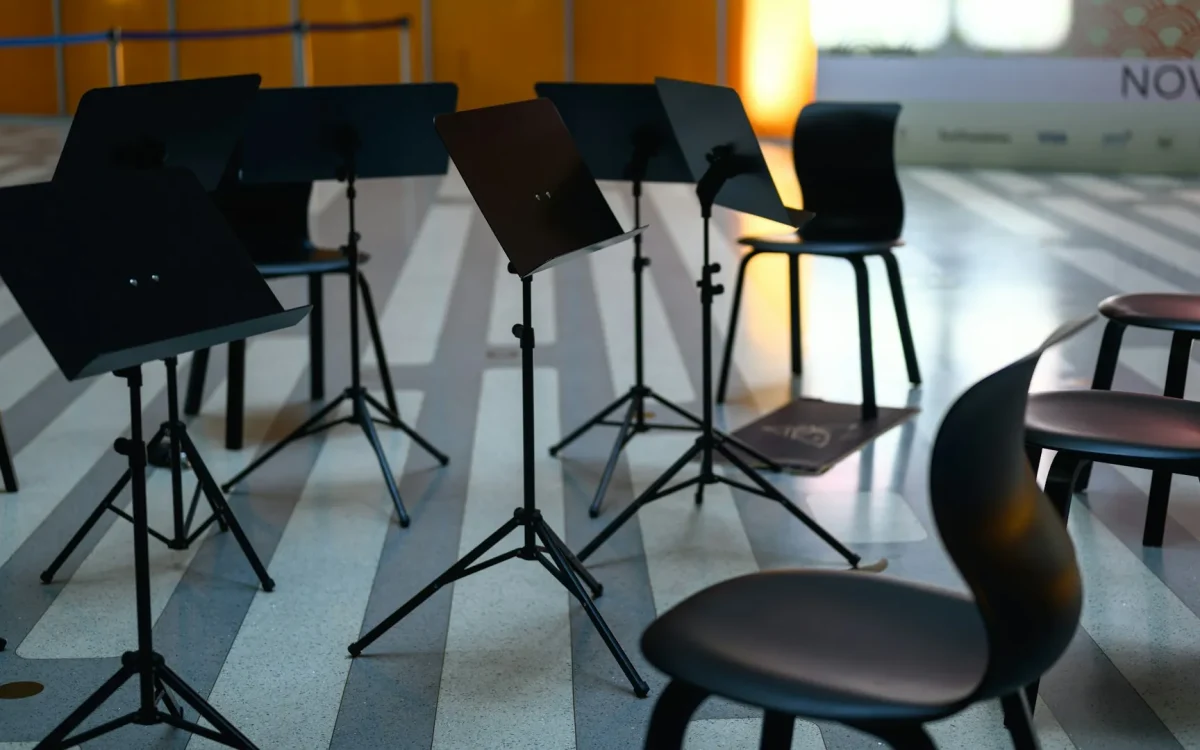
A music stand seems like a small accessory, but it has a big effect on practice. Without one, students often read music from a table or the floor, hunching over and straining their necks. A good stand holds music at eye level, improves posture, keeps pages steady and makes practice more comfortable. This guide explains the types of stand and lists five well-regarded options.
Types of music stand
| Type | Advantages | Drawbacks |
|---|---|---|
| Folding wire stand | Light, cheap, portable | Less stable, music can slip |
| Solid desk (orchestral) stand | Very stable, holds heavy books | Heavier, less portable |
| Collapsible solid desk stand | Portable and steadier than wire | Costs more than wire |
| Desktop stand | For tables, keyboards and desks | Not for standing players |
What to look for
Stability
A stand should hold music firmly without wobbling or tipping, especially with heavy books. Solid desk stands are the most stable; wire stands suit light sheets and travel.
Height range
Check that the stand adjusts low enough for seated children and high enough for standing adults. The top of the music should be roughly at eye level.
Desk angle and size
An adjustable desk angle lets players read comfortably whether seated or standing. A wide desk holds open books and several sheets.
Portability
Students who carry stands to lessons or rehearsals need a light, folding model with a carry bag.
Five music stands worth a look
These picks are based on long-standing use in schools, orchestras and studios, and on published specifications. Check current versions and colours.
Best solid stand for home
Manhasset M48 Symphony Stand
Solid desk · adjustable height and tilt · very stable · used in schools and orchestras
The Manhasset M48 is the classic orchestral stand, found in schools and concert halls around the world. It is extremely stable, holds heavy books and lasts for decades.
Suits: home practice, teaching studios and serious students.
Skip if: you need to carry a stand regularly.
Check the price on Amazon Price band: $$
Best portable solid stand
Manhasset Voyager
Collapsible solid desk · folds compactly · adjustable height
The Voyager offers the steadiness of a solid desk in a stand that folds down for travel. It is a good compromise for students who carry their stand to lessons and rehearsals.
Suits: students who need portability and stability.
Skip if: budget is very limited.
Check the price on Amazon Price band: $$
Best quality folding stand
K&M 101 Folding Music Stand
Folding wire design · German-made · adjustable height · compact
König & Meyer is known for well-made stands. The 101 is a sturdy folding stand that is light and compact, with better build quality than many cheap wire stands.
Suits: students who need a light stand for lessons and travel.
Skip if: you use heavy books regularly.
Check the price on Amazon Price band: $
Best budget folding stand
On-Stage SM7211B
Folding wire stand · lightweight · carry bag included
An inexpensive, lightweight folding stand that suits sheets and thin books. It is a practical choice for beginners and as a spare stand.
Suits: beginners and occasional use.
Skip if: you need a stand for heavy method books.
Check the price on Amazon Price band: $
Best collapsible all-rounder
Peak SMS-20
Collapsible solid desk · adjustable height · carry bag
Peak’s collapsible stand combines a solid desk with a design that packs down small. It is popular with students and gigging musicians who want something sturdier than wire.
Suits: students who rehearse in different places.
Skip if: you want the heaviest-duty option for a studio.
Check the price on Amazon Price band: $
Accessories
- A clip-on stand light for dim rooms and performances.
- Page clips to stop pages turning in a breeze.
- A tablet holder if you read music from a tablet.
- A pencil holder or tray so markings are always possible.
Setting up a stand correctly
Position the stand directly in front of you, so you do not twist your neck or body. Adjust the height so your eyes look slightly down at the music without bending your head forward. For violin and viola players, the stand is often slightly to the left. For singers, a stand slightly lower than eye level keeps the head and chin in a good position. Good stand setup supports good posture. See common singing mistakes.
A closer look: music stands for teaching studios
Teachers benefit from at least one solid stand for students and sometimes a second for themselves. Solid stands allow you to write notes on the music easily and hold heavy method books and exam books. A stand that adjusts easily for children and adults saves time between lessons. See setting up a home teaching studio.
Putting it into practice
For home practice, choose a solid desk stand; for carrying to lessons, add a light folding or collapsible stand. Set the height correctly and keep a pencil on the stand. Our metronome and practice timer work well on a tablet placed on the stand.
Caring for your stand
A good stand lasts for many years with a little care. Tighten adjustment knobs firmly but not excessively, as overtightening can strip threads. Collapse folding stands gently, following the order of the joints, rather than forcing them. Keep solid stands away from damp garages and basements, where metal parts can rust. If a stand starts to slip in height, check the clutch or knob before replacing it; many manufacturers sell spare parts. Wipe the desk occasionally so music stays clean.
Frequently asked questions
Is a wire music stand good enough?
For light sheets and travel, yes. For heavy books and home practice, a solid stand is better.
How high should a music stand be?
The music should be roughly at eye level, so you do not bend your neck.
Do pianists need a music stand?
Usually not; pianos and keyboards have a music rest. A stand helps if the rest is too small.

Questions and notes