Best Metronomes and Tuners for Students
Every music student needs a way to keep time and play in tune. Clip-on tuners, combo tuner-metronomes, mechanical and digital metronomes, apps, and six well-regarded tools for students.
In this guide
We may earn a commission when you buy through links on this page, at no extra cost to you. How we choose instruments.
A metronome and a tuner are two of the most important tools a music student can own. A metronome builds steady timing, helps students practise difficult passages slowly and increase speed gradually, and trains the internal sense of pulse. A tuner ensures instruments are in tune, which trains the ear and makes practice sound better. Both are inexpensive, and many students use free apps. This guide explains the options and recommends six well-regarded tools.
Types of tuner
| Type | How it works | Best for |
|---|---|---|
| Clip-on tuner | Senses vibration through the instrument | Guitar, ukulele, violin, works in noisy rooms |
| Microphone tuner | Listens through a microphone | Wind and brass, voice |
| Combo tuner-metronome | Both functions in one device | Band and orchestra students |
| Pedal tuner | Plugs into electric instruments | Electric guitar and bass |
| App | Uses phone microphone | Quick checks, quiet rooms |
Types of metronome
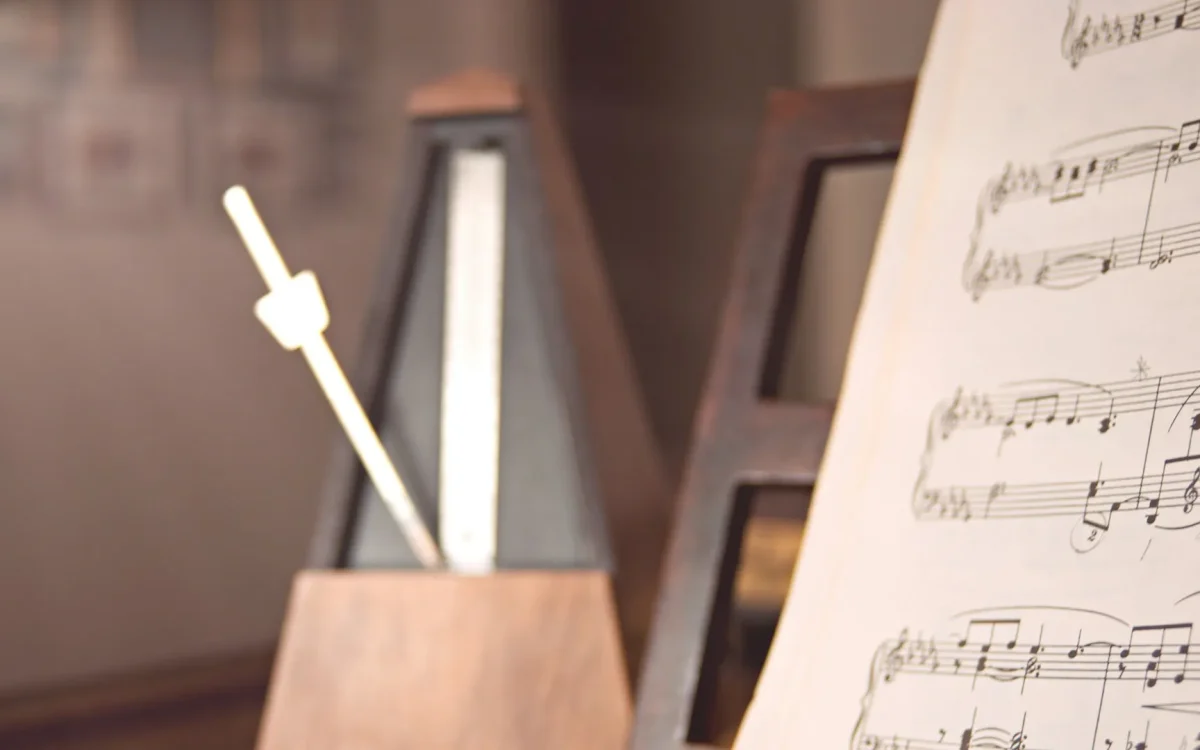
Mechanical metronomes use a swinging pendulum and need no batteries; many students find the visual swing helpful. Digital metronomes offer more features, such as accents, subdivisions and headphone outputs. Apps and online metronomes, such as our free metronome, are convenient and capable.
Six tools worth a look
These picks are based on reputations among teachers and students and on published specifications. Check current models.
Best clip-on tuner for most students
Snark ST-8 Super Tight
Clip-on · chromatic · bright rotating display · guitar, ukulele, violin and more
Snark clip-on tuners are popular with guitarists and ukulele players for their clear display and quick response. They work well in noisy rooms because they sense vibration.
Suits: guitar, ukulele, bass and string students.
Skip if: you play a wind instrument; choose a microphone tuner.
Check the price on Amazon Price band: $
Best discreet clip-on
D'Addario Micro Headstock Tuner
Clip-on · very small · chromatic · fits behind the headstock
This tiny tuner clips behind the headstock and can stay on the instrument all the time, so tuning is always quick. It is a favourite with guitarists and ukulele players.
Suits: students who want a tuner that stays on the instrument.
Skip if: you prefer a large, easy-to-read display.
Check the price on Amazon Price band: $
Best combo for band and orchestra
Korg TM-60
Tuner and metronome in one · microphone and clip-on input · large display
A combined tuner and metronome is ideal for band and orchestra students. The TM-60 lets students check tuning and practise with a click from one device, and can be used with a clip-on pickup.
Suits: wind, brass and string students in school ensembles.
Skip if: you only need a tuner for guitar.
Check the price on Amazon Price band: $
Best compact digital metronome
Korg MA-2
Digital metronome · beat and rhythm patterns · loud speaker · headphone output
A simple, affordable digital metronome with clear sound, rhythm patterns and a headphone output. It is easy for students to use and reliable.
Suits: students wanting a dedicated metronome.
Skip if: you prefer a mechanical metronome’s visual swing.
Check the price on Amazon Price band: $
Best mechanical metronome
Wittner Taktell mechanical metronome
Mechanical pendulum · no batteries · bell options on some models
Wittner has made mechanical metronomes for generations. The swinging pendulum gives a visual and audible beat that many piano students and teachers love.
Suits: piano students and anyone who likes a visual beat.
Skip if: you need subdivisions or headphone use.
Check the price on Amazon Price band: $$
Best for electric guitar and bass
Boss TU-3
Pedal tuner · very accurate · bright display · built to last
For electric guitarists and bassists who play through an amplifier, a pedal tuner is reliable and accurate. The TU-3 is a long-standing industry standard.
Suits: electric guitar and bass players.
Skip if: you play acoustic instruments only.
Check the price on Amazon Price band: $$
Free alternatives
Our free online metronome works on any phone, tablet or computer, with adjustable tempo and accents. Tuning apps are useful in quiet rooms. For many students, a free metronome plus an inexpensive clip-on tuner covers everything.
How to practise with a metronome
- Start slower than you think, at a tempo where you can play accurately.
- Increase the speed gradually, a few beats per minute at a time.
- Practise difficult passages separately before playing the whole piece.
- Try clicking only on beats 2 and 4, or only on beat 1, to build internal pulse.
See rhythm basics and guitar rhythm skills.
A closer look: tuning and ear training
A tuner is a great tool, but students should also learn to listen. After tuning with a tuner, play a chord or interval and listen to how it sounds. Over time, students learn to hear when something is slightly out of tune. String players often tune by ear using intervals, a valuable skill. Our free ear trainer supports this. See how to tune a guitar.
Putting it into practice
Choose a tuner suited to your instrument and a metronome you enjoy using. Tune at the start of every practice session, and use the metronome for scales, exercises and tricky passages. Track your metronome speeds in a practice log to see progress.
Choosing by instrument
Guitar, ukulele, violin, viola, cello and bass players are usually best served by a clip-on tuner, which ignores background noise. Wind and brass players often prefer a tuner with a microphone, or a combo tuner-metronome with a clip-on pickup for noisy rehearsals. Pianists rarely need a tuner, since pianos are tuned by a technician, but every pianist benefits from a metronome. Singers can use a tuner app to check pitch-matching practice. Drummers need a metronome above all, ideally one that connects to headphones.
Frequently asked questions
Do beginners need a metronome?
Yes. A metronome builds steady rhythm, one of the most important skills.
Which tuner is best for violin?
A clip-on chromatic tuner or a combo tuner-metronome works well.
Are tuning apps accurate?
Generally yes in quiet rooms. Clip-on tuners work better in noisy places.



Questions and notes