Online or In-Person Music Lessons: Which Is Better?
Online lessons have become a real alternative to the traditional studio. The pros and cons of each, which instruments and ages suit online learning, the equipment you need and how to choose.
In this guide
Not long ago, music lessons almost always meant travelling to a teacher’s studio or having a teacher visit your home. Today, online lessons are a common, effective alternative, used by beginners and advanced students around the world. But which is better? The answer depends on the student’s age, instrument, goals and circumstances. This guide compares the two and helps you decide.
The benefits of in-person lessons
In-person lessons allow the teacher to see and hear everything clearly, from posture and hand position to subtle tone. The teacher can adjust a student’s position physically (with permission), demonstrate on the student’s instrument and play duets in real time. Young children often focus better with a teacher in the room. For instruments where posture is complex, such as violin, or where sound quality is subtle, in-person teaching has clear advantages, especially at the start.
The benefits of online lessons
Online lessons remove travel time and widen your choice of teachers far beyond your local area. You can find a specialist in a particular instrument, style or exam board anywhere in the world. Lessons can fit more easily into busy schedules, and students learn on their own instrument at home. Many teachers share digital materials, recordings and notes easily online. For older children, teenagers and adults, online lessons can be just as effective as in-person lessons.
Drawbacks to consider
Online lessons depend on a good internet connection, and audio delays make playing together in real time difficult. Sound quality through video calls is limited, so subtle tone can be harder to judge. Teachers cannot physically adjust position, and young children may lose focus on screen. In-person lessons, on the other hand, involve travel, may limit your choice of teachers and can be harder to schedule.
Comparison at a glance
| Factor | In person | Online |
|---|---|---|
| Feedback on posture and tone | Excellent | Good with a good setup |
| Playing together | Easy | Difficult due to delay |
| Choice of teachers | Local only | Worldwide |
| Travel time | Yes | None |
| Young children (under 7) | Usually better | Possible with parent help |
| Scheduling flexibility | Moderate | High |
Which instruments work well online?
Piano, keyboard, guitar, ukulele, singing and music theory all work very well online. Wind instruments and drums can work well with a good setup. String instruments such as violin and cello work online but benefit from some in-person lessons at the start, when posture and bow hold are being established. For any instrument, the quality of the camera angle and sound makes a big difference.
Which ages suit online lessons?
Teenagers and adults usually adapt to online lessons easily. Children from about eight upwards can do well, especially if a parent helps set up and stays nearby. Children under seven often benefit more from in-person lessons, though short, game-based online lessons with a parent participating can work. See music lessons for adults.
Setting up for online lessons
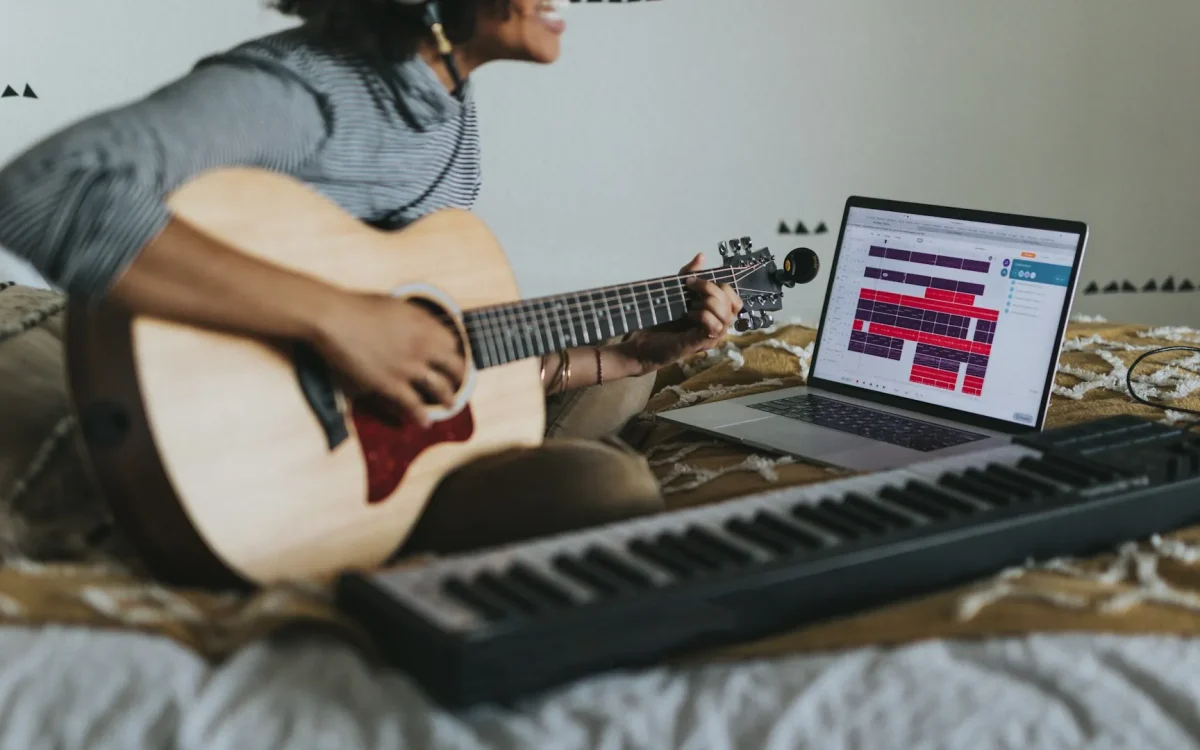
Use a laptop, tablet or computer rather than a phone if possible, with a stable internet connection. Position the camera so the teacher can see your hands and posture; for piano, a side angle showing both hands and the keyboard works well. Use headphones or good speakers to hear clearly. Many video platforms have a music or “original sound” mode that improves audio quality. Have your music, a pencil and a notebook ready. Test everything before the first lesson.
Hybrid options
Many students combine both formats: regular online lessons with occasional in-person sessions, or in-person lessons with online lessons when travel is difficult. Hybrid learning gives the flexibility of online lessons with the benefits of in-person feedback. Some teachers also offer recorded feedback, where students send videos of their playing between lessons.
Choosing a teacher online
When choosing an online teacher, ask the same questions you would for an in-person teacher, plus questions about their online setup and experience. Ask for a trial lesson to check the connection, camera angle and teaching style. See questions to ask a music teacher.
A closer look: video lessons and apps
Online lessons with a live teacher are different from pre-recorded video courses and learning apps. Live lessons give personalised feedback; videos and apps provide structured content but cannot correct your posture or habits. Videos and apps can be excellent supplements to lessons, or a starting point for self-learners, but they work best alongside some live feedback. See learning music from online videos and using music learning apps.
Putting it into practice
Consider the student’s age, instrument, schedule and local options. If in doubt, try a trial lesson in each format. Set up a good camera angle and quiet space for online lessons, and keep a lesson notebook either way. Our guide to your first music lesson helps you prepare.
Frequently asked questions
Are online music lessons as good as in-person lessons?
For many students, especially older children and adults, they can be just as effective.
Can young children learn online?
Yes, with short lessons and a parent helping, though in-person lessons often suit them better.
What equipment do I need for online lessons?
A device with a camera, stable internet, good audio and a camera angle that shows your hands.


Questions and notes