15 Music Games for Kids You Can Play at Home
Fifteen simple music games that build rhythm, listening, pitch and reading skills at home, with no special equipment and no musical training needed for parents.
In this guide
Children learn music best through play. A few minutes of musical games each day builds the skills that make lessons easier: a steady beat, careful listening, a sense of high and low, and confidence. You do not need to read music or own instruments to play most of these games. A table to tap on, your voice and a phone for playing songs are enough.
Rhythm games
1. Copy my clap
Clap a short rhythm and ask your child to copy it. Start with four even claps, then add short and long sounds. Swap roles so your child leads. Teaches: listening, rhythm memory.
2. Freeze dance with a beat
Play music and dance; when it stops, everyone freezes. Make it harder by asking children to march exactly on the beat. Teaches: pulse, listening for changes.
3. Name rhythms
Clap the rhythm of family names: “Ma-ri-a” (three short), “Tom” (one long). Then clap a name and guess whose it is. Teaches: syllables as rhythm, the foundation of reading note values. See rhythm clapping games.
4. Kitchen band
Pots, wooden spoons, rice in a bottle: build a band and play along to a favourite song, keeping the beat. Teaches: steady beat, playing together.
5. Echo drumming
One person plays a pattern on a drum or table; the other answers with a different pattern of the same length, like a conversation. Teaches: phrasing, improvisation.
Listening games
6. Guess the instrument
Play short clips of instruments and guess what they are. Start with very different sounds (drums, violin, trumpet), then make it harder. Teaches: timbre, curiosity about instruments.
7. Loud and quiet
Play music and ask your child to move big for loud music and tiny for quiet music. Teaches: dynamics.
8. Fast and slow animals
Children move like a tortoise for slow music and a rabbit for fast music. Teaches: tempo.
9. Sound hunt
Sit quietly for one minute and list every sound you hear. Then try to copy them with your voice. Teaches: focused listening.
Pitch and singing games
10. High and low
Sing or play a high sound and a low sound; children reach up for high and touch the floor for low. Use a keyboard app if you do not trust your voice. Teaches: pitch direction.
11. Musical stairs
Sing up and down a simple scale (“do re mi…”), stepping up and down real stairs or drawn steps. Teaches: scale, singing in tune.
12. Finish the song
Sing a familiar song and stop before the last word or note; your child finishes it. Teaches: musical memory, sense of phrase ending.
Reading and theory games
13. Note hopscotch
Draw a large staff with chalk or tape and call out note names; children jump to the correct line or space. Teaches: reading notes on the staff. Pair it with our free note reading trainer.
14. Rhythm card race
Write simple rhythms on cards; children clap them as fast as they can while staying accurate. Teaches: reading rhythm. See note values for kids.
15. Composer’s corner
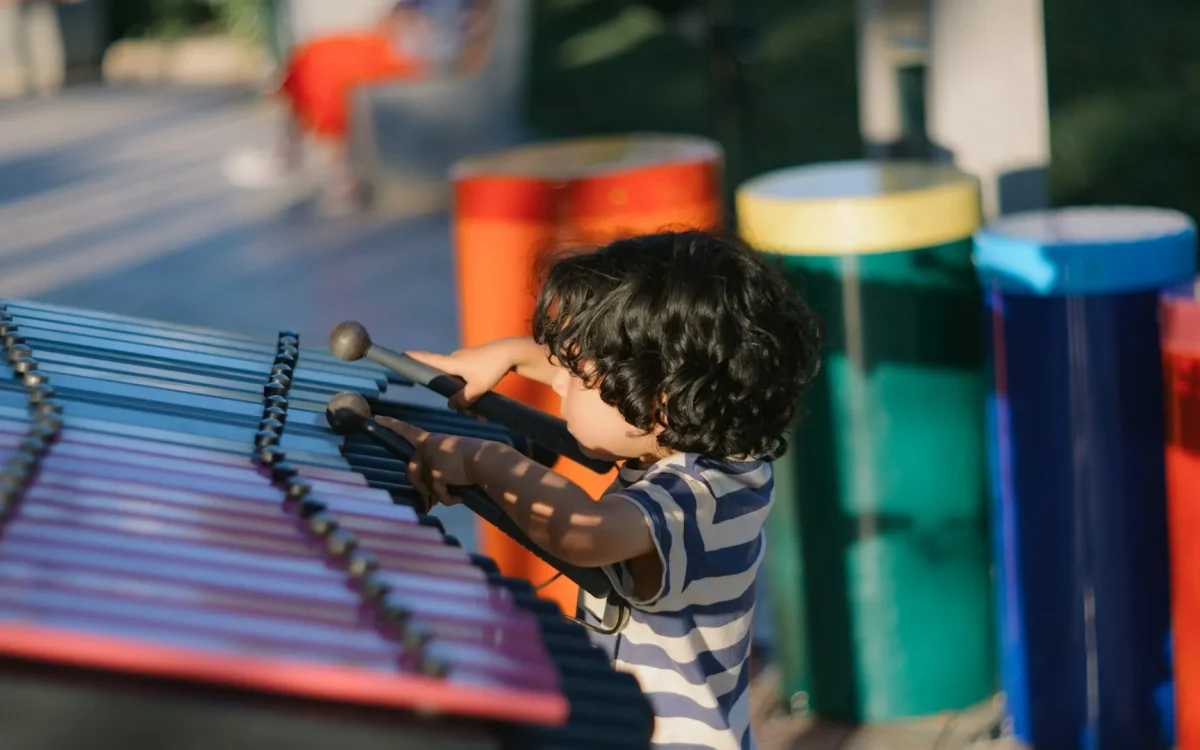
Children make up a short tune on a keyboard, xylophone or app and give it a title. Record it and play it back. Teaches: creativity, ownership of music.
Which games for which age?
| Age | Best games | Session length |
|---|---|---|
| 3–5 | Freeze dance, loud and quiet, fast and slow animals, kitchen band | 5–10 min |
| 5–7 | Copy my clap, name rhythms, high and low, guess the instrument | 10 min |
| 7–9 | Echo drumming, musical stairs, note hopscotch, finish the song | 10–15 min |
| 9–11 | Rhythm card race, composer’s corner, sound hunt challenges | 15 min |
Tips for playing music games at home
- Keep it short and stop while it is still fun. Children should want to play again.
- Join in. Your enthusiasm matters more than your skill.
- Let children lead. Taking turns as the leader builds confidence.
- Connect to lessons. Ask your child’s teacher which skills to reinforce, and choose matching games.
- Use games as practice warm-ups. Two minutes of a game can make practice feel lighter. See how to get kids to practise.
Need fresh ideas every week?
The Kids Music Activity Planner AI suggests age-appropriate games and activities based on your child’s age, interests and instrument. Teachers can find classroom versions in our guide to classroom music games.
Turning games into real progress
Games are most powerful when they connect to what your child is learning in lessons. If the teacher is working on steady rhythm, spend a week on copy-my-clap, kitchen band and echo drumming. If your child is learning to read notes, play note hopscotch and rhythm card races for a few minutes before practice. Ask the teacher at the end of each lesson which skill to reinforce at home, and choose one game that matches it. Children rarely notice that the game is doing the same job as an exercise, but they learn just as much, and they ask to play again tomorrow. Over a term, these few minutes add up to dozens of hours of musical training that never felt like work.
Keep a simple list of the games your family enjoys most on the fridge, and let your child pick one each day. Ownership matters: a child who chooses the game plays it with more energy. When a game becomes too easy, add a twist, such as faster rhythms, longer patterns or a new instrument, so it keeps stretching their skills.
Frequently asked questions
Do I need to know music to play these games?
No. Most games need only clapping, listening and moving. For pitch games, a free keyboard app gives you accurate notes.
Can music games replace lessons?
They build valuable skills and enjoyment, but lessons add structure, technique and feedback. Games work best alongside lessons.
How often should we play?
A few minutes most days is ideal. Short, regular play builds skills steadily.

Questions and notes