The Major Scale Explained Simply
The major scale is the foundation of most Western music. Its pattern of tones and semitones, how to build it on any note, solfa, scale degrees, and why it matters for melody, chords and keys.
In this guide
If you have ever sung “do, re, mi, fa, so, la, ti, do”, you already know the major scale. It is the bright, familiar sequence of notes that underpins most Western music, from nursery rhymes to symphonies and pop songs. Understanding how the major scale works helps you read music, learn pieces faster, understand chords and keys, and even work out songs by ear. This guide explains it simply.
What is a scale?
A scale is a series of notes in order, going up or down, usually covering an octave (from one note to the next note with the same name). Different scales have different patterns of steps between notes, which give them their character. The major scale sounds bright and happy, while minor scales often sound darker or sadder.
The C major scale
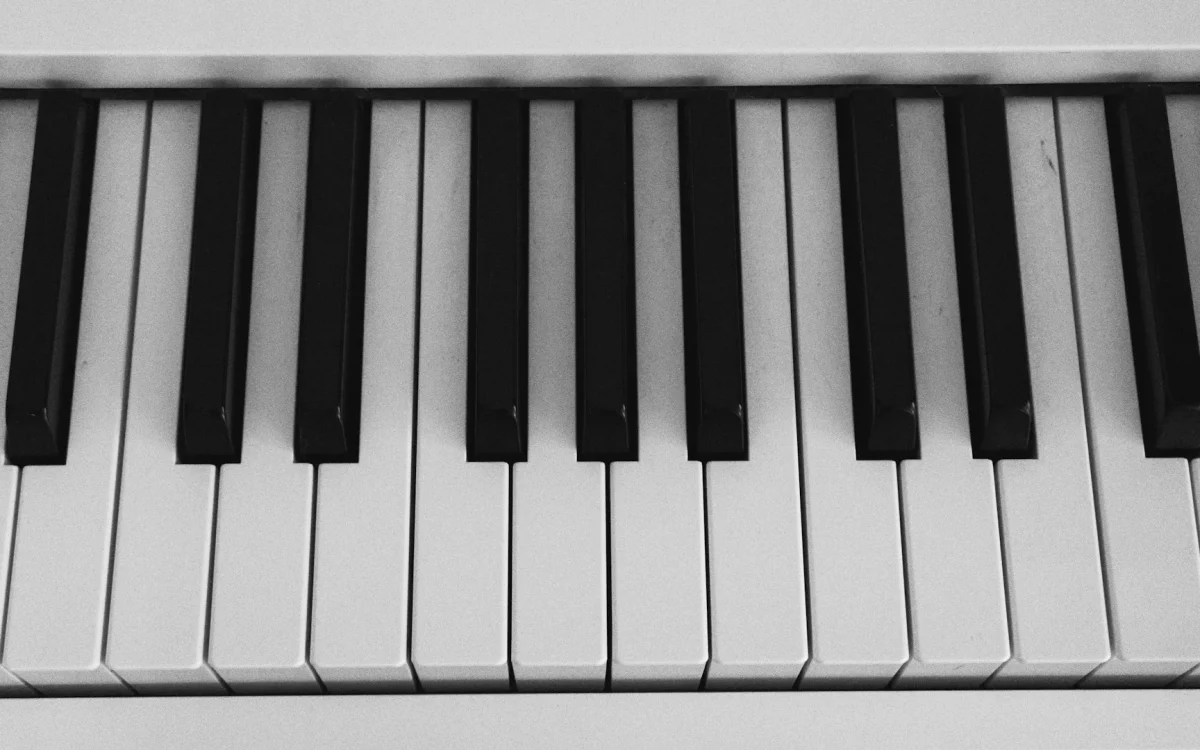
The easiest major scale to see is C major, because it uses only the white keys on the piano: C, D, E, F, G, A, B, C. Play it slowly and listen. It sounds complete and settled when you return to C at the top. On guitar, C major can be played starting on the third fret of the A string.
The pattern: tones and semitones
What makes a major scale is its pattern of tones (whole steps, two semitones) and semitones (half steps, one semitone). The pattern is: tone, tone, semitone, tone, tone, tone, semitone. In C major, the semitones fall between E and F and between B and C, which are the white keys with no black key between them. This pattern is the same for every major scale.
| From | To | Step |
|---|---|---|
| C | D | Tone |
| D | E | Tone |
| E | F | Semitone |
| F | G | Tone |
| G | A | Tone |
| A | B | Tone |
| B | C | Semitone |
Building a major scale on any note
You can build a major scale starting on any note by following the pattern. Start on G: G to A is a tone, A to B is a tone, B to C is a semitone, C to D a tone, D to E a tone, and E to F would only be a semitone, so we need F sharp to make a tone. Then F sharp to G is a semitone. So G major is G, A, B, C, D, E, F♯, G. That one sharp becomes the key signature of G major. See sharps, flats and naturals.
Another example: F major
Start on F: F to G is a tone, G to A a tone, and A to B would be a tone, but we need a semitone, so we use B flat. Then B flat to C is a tone, C to D a tone, D to E a tone, and E to F a semitone. So F major is F, G, A, B♭, C, D, E, F, with one flat. See key signatures for beginners.
Solfa: do, re, mi
Solfa (or solfège) gives each note of the scale a syllable: do, re, mi, fa, so, la, ti, do. In “movable do” systems, “do” is always the first note of the scale, whatever the key. Solfa helps singers and instrumentalists hear the relationships between notes and is used widely in music education. Singing scales with solfa is an excellent ear-training exercise. See ear training for singers.
Scale degrees
Each note of the scale is also numbered: 1 for the first note (the tonic), 2, 3, 4, 5 (the dominant), 6, 7 and 8 (the tonic again). Musicians talk about scale degrees to describe melodies and chords in any key. For example, many melodies end on degree 1, and the chord built on degree 5 creates tension that wants to resolve to the chord on degree 1.
Why the major scale matters
Most melodies in major keys use notes from the major scale. Chords are built from scale notes too: the main chords in a key are built on degrees 1, 4 and 5. Knowing the scale of a piece helps you predict notes, read more fluently, improvise and understand harmony. See what is a chord.
Practising scales
Practise scales slowly and evenly, with correct fingering on your instrument. Start with C major, then G and F, and add others gradually. Use a metronome to keep the rhythm steady. Sing the scale with solfa or note names as you play. Many graded exams include scales, so regular practice also prepares you for exams. See graded music exams explained.
A closer look: major versus minor
The natural minor scale uses a different pattern: tone, semitone, tone, tone, semitone, tone, tone. A minor uses the same notes as C major but starts on A: A, B, C, D, E, F, G, A. Because they share the same notes and key signature, A minor is called the relative minor of C major. Playing C major and then A minor one after the other is a great way to hear the difference in character between major and minor.
Putting it into practice
Play and sing C major every day this week. Then build G major and F major yourself using the pattern, checking with a keyboard. Try singing simple tunes with solfa. Our piano chord finder shows the chords built on each scale. The Note Reading Tutor AI can create scale exercises for your instrument.
Frequently asked questions
How many major scales are there?
There are twelve, one starting on each note, though some have two names.
Why does C major have no sharps or flats?
Its pattern of tones and semitones fits the white keys exactly.
Do I need to learn all the scales?
Start with a few common ones. Exams and teachers introduce more gradually.

Questions and notes