What Is a Chord? A Simple Explanation for Beginners
A chord is three or more notes sounding together. How chords are built from scales, major and minor triads, chord symbols, the I-IV-V pattern, inversions and how chords work on piano and guitar.

In this guide
Chords are everywhere in music. Guitarists strum them, pianists play them under melodies, choirs sing them, and almost every song you know is built on a sequence of chords. Yet many beginners are not quite sure what a chord actually is or how it works. This guide explains chords simply, from the basic idea to the patterns that make songs work, with examples on piano and guitar.
The basic idea
A chord is three or more different notes played or sung at the same time. When notes sound together in certain combinations, they create harmony, a rich, full sound that supports a melody. A melody is a line of single notes, one after another; chords are notes stacked together. Most music combines both: a melody on top and chords underneath.
Triads: three-note chords
The most common chords are triads, made of three notes. A triad is built by stacking skips: a root note, the note a third above it, and the note a fifth above the root. For example, C major is C, E and G. On a piano, play C, skip D, play E, skip F, play G. The root (C) gives the chord its name. See steps and skips.
Major and minor chords
The difference between major and minor chords is the middle note. In C major (C, E, G), the distance from C to E is four semitones, a major third. In C minor (C, E flat, G), the distance from C to E flat is three semitones, a minor third. Major chords tend to sound bright and happy; minor chords sound darker or more emotional. Play C major and C minor one after another to hear the difference.
| Chord | Notes | Sound |
|---|---|---|
| C major | C, E, G | Bright |
| C minor | C, E♭, G | Darker |
| G major | G, B, D | Bright |
| A minor | A, C, E | Darker |
| F major | F, A, C | Bright |
| D minor | D, F, A | Darker |
Chord symbols
In songbooks, lead sheets and guitar music, chords are written as symbols above the melody or lyrics. A capital letter alone means a major chord: “C” is C major. A lowercase “m” means minor: “Am” is A minor. A “7” adds another note: “G7” is G major with an added F, creating a chord that leads strongly back to C. Other symbols, such as “sus4”, “maj7” and “dim”, describe other chord types you will meet later.
Chords built from scales
In any major key, you can build a triad on each note of the scale using only notes from that scale. In C major, this gives C major, D minor, E minor, F major, G major, A minor and B diminished. These are the chords that naturally belong to the key. Musicians number them with Roman numerals: I, ii, iii, IV, V, vi and vii°. See the major scale explained simply.
The I-IV-V pattern
The three most important chords in a major key are I, IV and V, the chords built on the first, fourth and fifth notes. In C major, these are C, F and G; in G major, G, C and D. Thousands of songs use only these three chords. Chord I feels like home, IV moves gently away, and V creates tension that wants to return home. Adding vi (A minor in C major) gives the famous I-V-vi-IV pattern heard in countless pop songs. See first three guitar chords.
Inversions
The notes of a chord can be arranged in different orders. When the root is the lowest note, the chord is in root position. When the third is lowest, it is in first inversion; when the fifth is lowest, second inversion. C major in first inversion is E, G, C. Inversions sound the same chord but with a different colour, and they let pianists move between chords with less hand movement. See piano chords for beginners.
Chords on piano and guitar
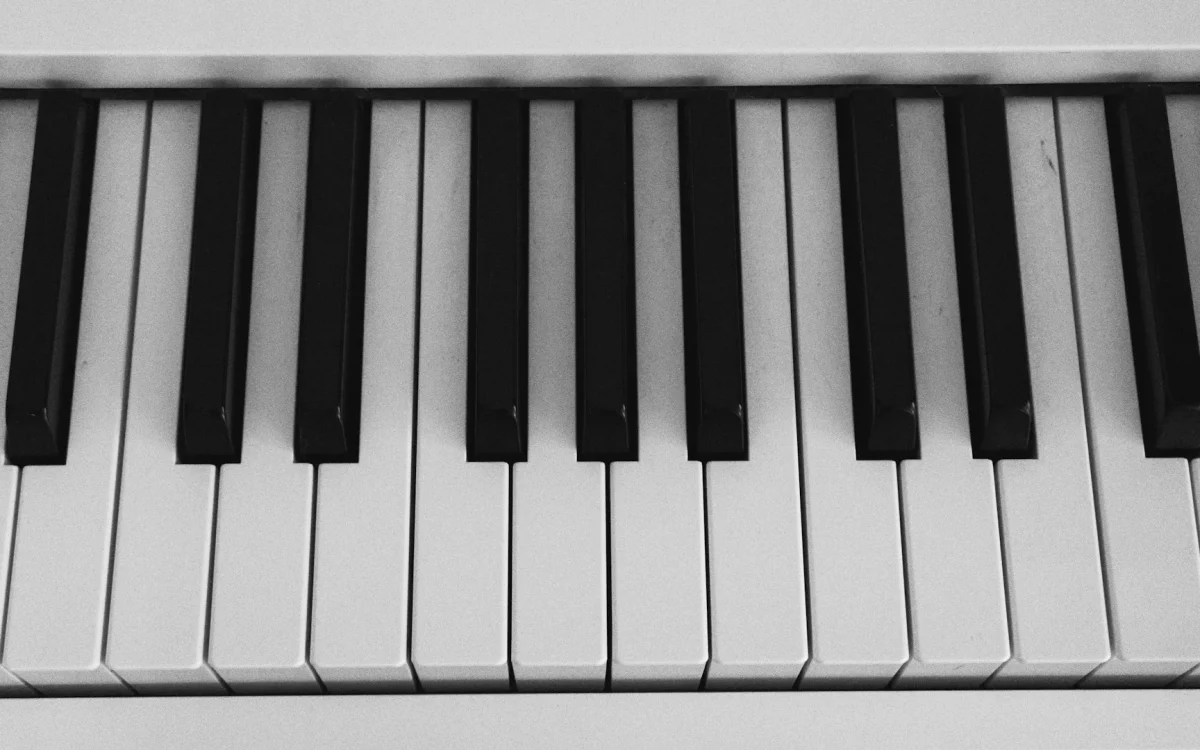
On the piano, triads are easy to see: play every other white key, such as C-E-G or F-A-C. Many piano accompaniments play chords in the left hand while the right hand plays the melody. On the guitar, chord shapes spread the notes across the strings, often doubling some notes, so a six-string chord may contain only three different notes. Our free piano chord finder shows the notes of any chord on a keyboard.
How chords and melody fit together
Chords and melody support each other. Usually, the melody notes on strong beats belong to the chord being played. When the melody moves to notes outside the chord, it creates gentle tension that resolves when it moves back to a chord note. Understanding this helps you choose chords for melodies, play by ear and even write your own songs.
A closer look: chords in everyday listening
Once you understand chords, you start to hear them everywhere. Listen to a simple song and notice when the “background” changes; those moments are usually chord changes. Try humming the lowest note you can hear (often the bass line), which frequently follows the chord roots. Ear-training exercises that distinguish major from minor chords sharpen this skill. See ear training.
Putting it into practice
On a piano or keyboard, play the triads built on each note of C major and listen to which sound major or minor. Then play C, F and G chords in different orders and notice how G leads back to C. On guitar, learn G, C and D and play the I-IV-V pattern. The Note Reading Tutor AI can explain chords in more depth.
Frequently asked questions
How many notes are in a chord?
At least three. Some chords have four or more notes.
Is a power chord a real chord?
A power chord has only two different notes (root and fifth), so strictly it is an interval, but guitarists call it a chord.
Why do some chords sound sad?
Minor chords have a smaller third, which our ears often hear as darker or more emotional.


Questions and notes