Sharps, Flats and Naturals in Plain English
What sharps, flats and naturals do, how to find them on piano and guitar, semitones and tones, enharmonic notes, accidentals that last for a bar, and key signatures, all explained simply.
In this guide
Sharps, flats and naturals are small symbols that cause big confusion for many beginners. Once you understand what they do, they are simple: they move a note up or down by the smallest step in Western music. This guide explains them in plain English, shows you where to find them on the piano and guitar, and clears up the most common questions.
Semitones and tones
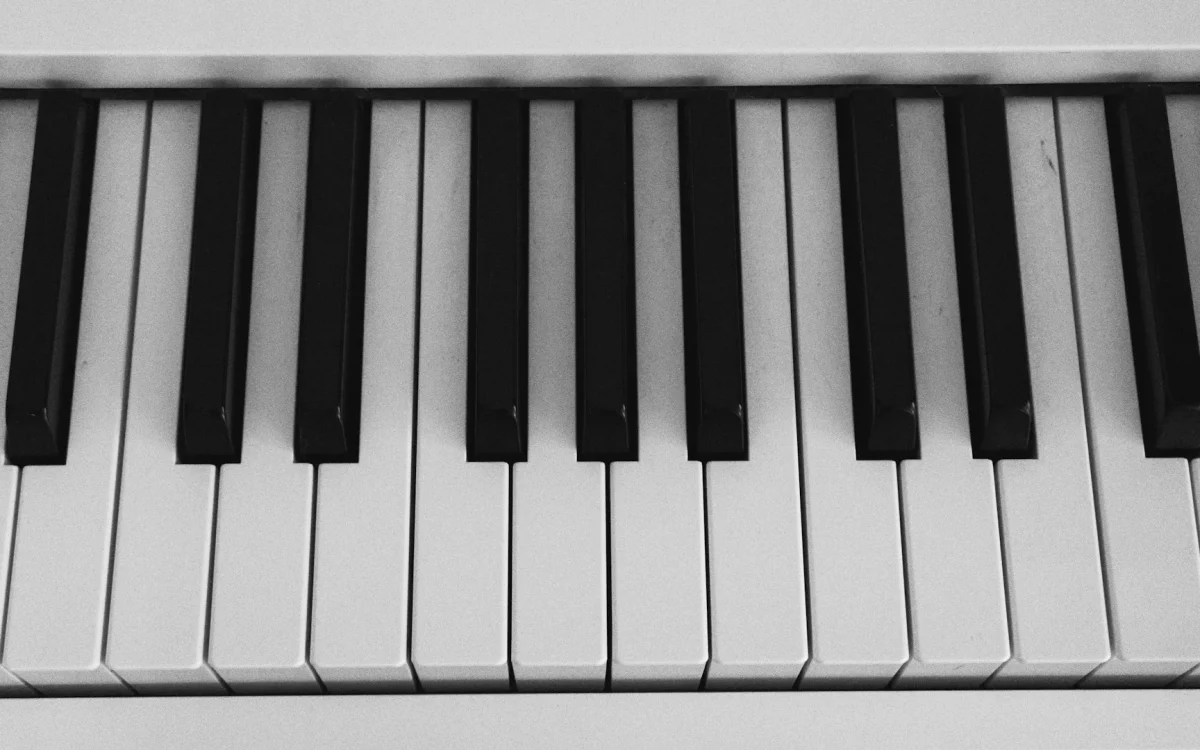
A semitone (also called a half step) is the smallest distance between two notes in Western music. On a piano, it is the distance from one key to the very next key, black or white. On a guitar, it is the distance of one fret. A tone (or whole step) is two semitones. Understanding semitones is the key to understanding sharps and flats.
The sharp sign (♯)
A sharp raises a note by one semitone. F sharp (F♯) is the note one semitone higher than F. On a piano, that is the black key immediately to the right of F. On a guitar, it is one fret higher than F. The sharp sign looks like a hash symbol (#) and is written just before the note on the staff, on the same line or space.
The flat sign (♭)
A flat lowers a note by one semitone. B flat (B♭) is one semitone lower than B. On a piano, it is the black key immediately to the left of B. On a guitar, it is one fret lower than B. The flat sign looks like a small, slanted letter “b”.
The natural sign (♮)
A natural cancels a sharp or flat, returning the note to its ordinary, “natural” pitch. If a piece has an F sharp earlier in the bar and then shows F with a natural sign, play an ordinary F. Naturals are used to cancel both accidentals within a bar and sharps or flats from the key signature.
At a glance
| Symbol | Name | Effect | On piano |
|---|---|---|---|
| ♯ | Sharp | Up one semitone | Next key to the right |
| ♭ | Flat | Down one semitone | Next key to the left |
| ♮ | Natural | Cancels a sharp or flat | The ordinary note |
Enharmonic notes: two names, one sound
Many notes have two names. F sharp and G flat are the same piano key and sound the same; they are called enharmonic equivalents. C sharp is the same as D flat, and so on. Which name is used depends on the key and the musical context. For a beginner, the important thing is to know that they sound identical on piano and guitar.
White-key sharps and flats
Most sharps and flats on the piano are black keys, but not all. There is no black key between E and F, or between B and C, because those notes are already a semitone apart. So E sharp is the same key as F, and C flat is the same key as B. These names appear occasionally in certain keys. They confuse many beginners, so it helps to look at the keyboard and count semitones.
Accidentals last for the whole bar
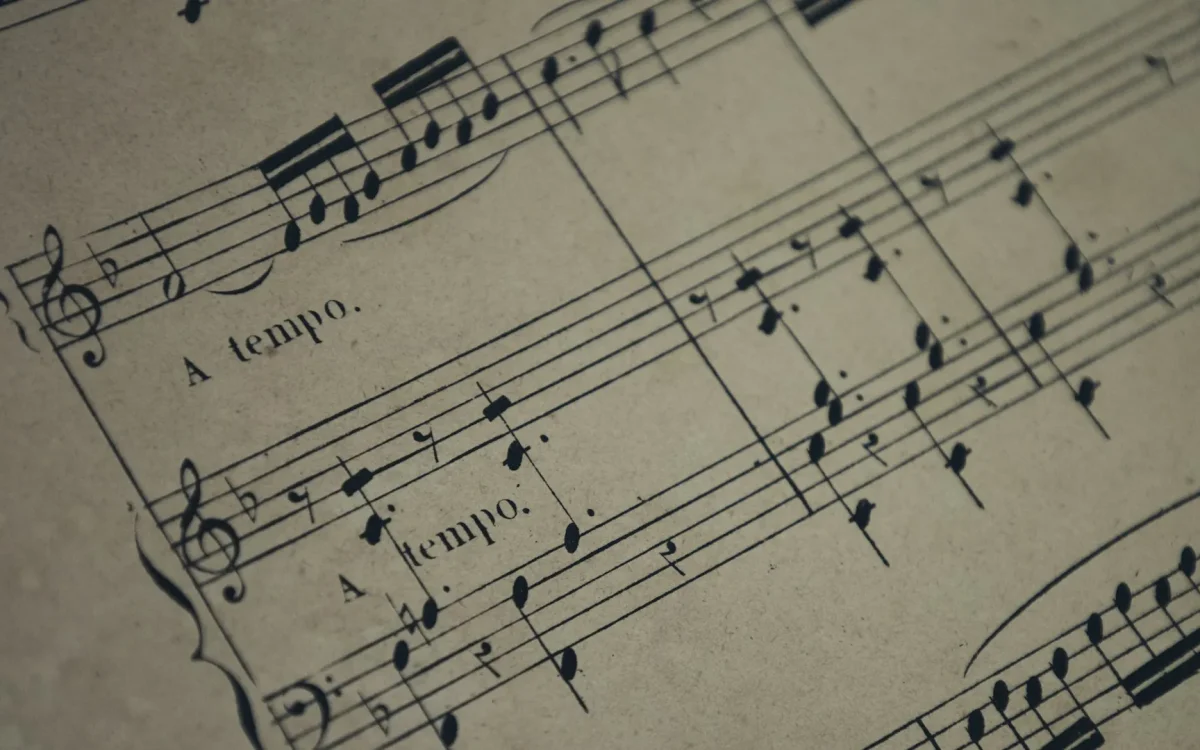
When a sharp, flat or natural appears in the music (rather than in the key signature), it is called an accidental. An accidental applies to that note for the rest of the bar, including any repeats of the same note in the same octave. At the next bar line, the accidental is cancelled automatically. Composers sometimes add “courtesy” accidentals as reminders. This rule causes many reading mistakes, so watch for repeated notes after an accidental.
Key signatures
Sharps or flats placed at the start of every line, just after the clef, form the key signature. They apply to every note of that name throughout the piece, in every octave, unless cancelled by a natural. For example, a key signature with one sharp on the F line means every F is played as F sharp. Key signatures save writing the same accidentals repeatedly. See key signatures for beginners.
Finding sharps and flats on guitar
On guitar, each fret is a semitone. To play a sharp, move one fret higher; to play a flat, move one fret lower. For example, if F is on the first fret of the high E string, F sharp is on the second fret. Learning the natural notes on each string first makes sharps and flats easy to find.
A closer look: why sharps and flats exist
The Western musical system divides the octave into twelve semitones, but the musical alphabet has only seven letters. Sharps and flats name the five notes between the letter names. They allow music to be written in any key, so melodies can start on any note and keep the same pattern of tones and semitones. This is why the same tune can be played higher or lower without changing its character. See the major scale explained simply.
Putting it into practice
Find every sharp and flat on a piano or guitar, naming each one both ways (for example, C sharp and D flat). Then look through a piece you are learning and circle every accidental, remembering that it lasts for the bar. Our free note reading trainer includes practice with accidentals. The Note Reading Tutor AI can explain any confusing examples.
Frequently asked questions
Are all black keys sharps or flats?
Yes, every black key is a sharp or flat. Some sharps and flats, like E sharp and C flat, are white keys.
Is F sharp the same as G flat?
On piano and guitar, yes. They are the same sound with different names.
How long does an accidental last?
Until the end of the bar, for that note in the same octave.

Questions and notes