Adult Piano Beginners: What to Expect in the First Six Months
Starting piano as an adult is exciting and occasionally humbling. A month-by-month guide to what adult beginners typically achieve, the common frustrations and how to keep progressing.

In this guide
More adults than ever are learning piano, whether fulfilling a childhood dream, returning after years away or simply looking for a creative escape. Adults bring real advantages to the piano: understanding, patience and clear goals. They also face particular challenges: busy lives, high expectations and the frustration of hands that do not yet do what the mind asks. Knowing what to expect makes the journey far more enjoyable.
Month 1: finding your way
The first month is about the keyboard map, posture, finger numbers and simple five-finger tunes. Many adults are surprised how quickly they can play a recognisable melody, and equally surprised by how awkward their left hand feels. Expect your fingers to feel clumsy and your counting to wobble. That is normal. Practise fifteen to twenty minutes a day if you can. See piano lesson 1.
Month 2: reading begins
You start reading notes in both clefs and playing short pieces from a method book. Reading can feel slow, like learning a new alphabet. Adults sometimes find it frustrating because they understand the concepts instantly but cannot yet read fluently. Short daily reading practice is the answer; see reading piano music on two staves.
Month 3: hands together
Playing with both hands at once is the biggest hurdle for most adults. Your brain wants both hands to do the same thing, and teaching them independence takes patience. Start with very simple pieces and play extremely slowly. Many adults describe a moment, often after several weeks, when hands-together playing suddenly “clicks”. Keep going until it does.
Months 4–5: chords and confidence
With basic reading and coordination in place, progress often speeds up. You learn chords, simple accompaniments and pieces that sound like real music. This is a satisfying stage: you can play for friends and family and begin to explore music you love. See piano chords for beginners.
Month 6: a real repertoire
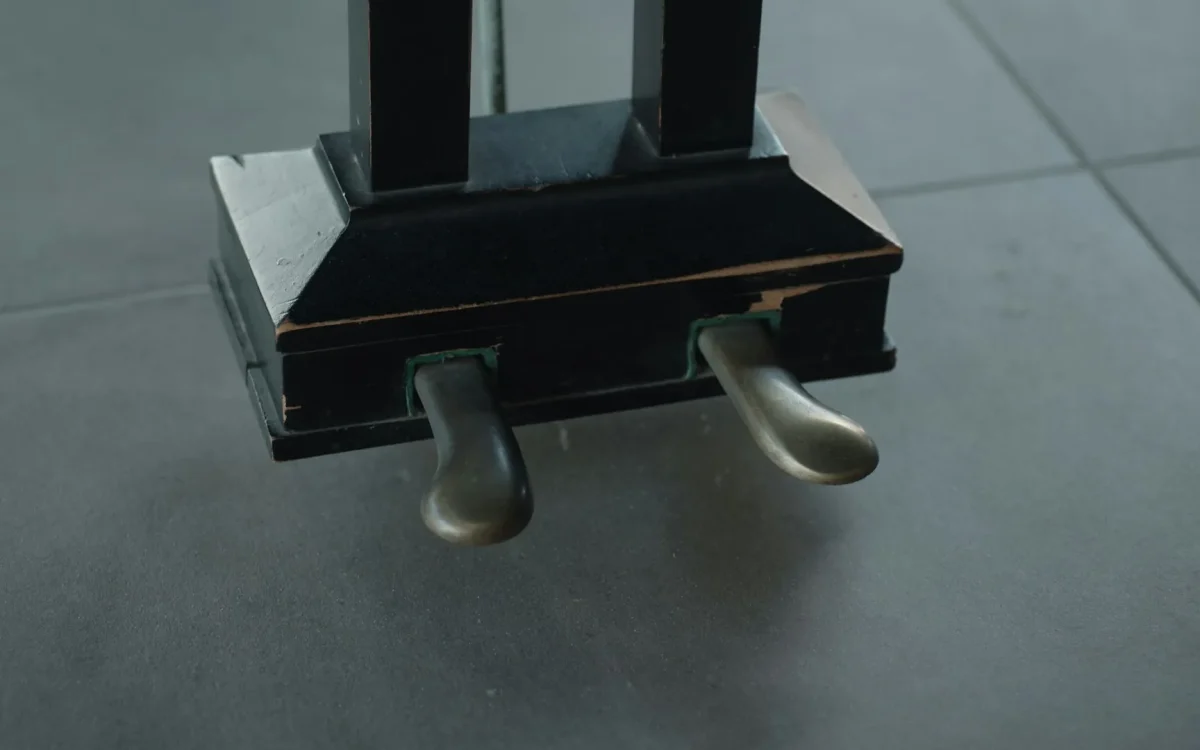
By six months of regular practice, many adults can play several simple pieces confidently, read beginner music, accompany simple songs with chords and use the sustain pedal. Progress depends on practice time and consistency, but the six-month mark is often when adults realise they genuinely play the piano.
Milestones at a glance
| Month | Typical milestone | Common frustration |
|---|---|---|
| 1 | Five-finger tunes in each hand | Clumsy left hand |
| 2 | Reading simple pieces in both clefs | Slow note reading |
| 3 | First hands-together pieces | Coordination feels impossible |
| 4–5 | Chords and simple accompaniments | Wanting to play harder music too soon |
| 6 | A small repertoire of confident pieces | Comparing yourself to others |
Adult advantages
Adults can understand theory quickly, plan practice, analyse problems and choose music they love. Use these strengths: ask why things work, set weekly goals, and keep a practice journal. Many adults progress faster than children in the first year because they can practise more deliberately.
Common adult challenges
- Perfectionism: adults often expect too much too soon. Progress in months, not days.
- Time: busy lives make daily practice hard. Short sessions count.
- Self-consciousness: playing in front of family or a teacher can feel embarrassing. Every pianist started as a beginner.
- Physical tension: adults often press too hard. Stay relaxed.
Putting it into practice
The adults who succeed at piano are rarely the most talented; they are the most consistent. Choose a fixed practice time, such as before work or after dinner, and protect it like an appointment. Keep the piano or keyboard uncovered and ready, with your music open, so starting takes seconds. Begin every session with something you enjoy, then spend the middle on your current challenge, and end with a piece you can play well. Record yourself once a month; listening back after three or six months is one of the most motivating things an adult learner can do. If you can, take a few lessons, even online, to check posture and technique early. Our 12-week roadmap gives a structure for the first three months, and the Piano Practice Buddy AI can adapt a plan to your schedule.
Learning with a teacher, an app or on your own
Adults have more choice than ever about how to learn. A teacher gives personal feedback on posture, technique and musicality, and keeps you accountable with weekly lessons. Apps provide instant feedback on notes and rhythm and can be motivating in short sessions, but they rarely correct hand shape or tension. Method books and online videos let you learn at your own pace and explore many styles. Many adult beginners combine approaches: a lesson every week or two to check technique and set goals, a method book for structure, and an app or videos for extra practice. Whatever mix you choose, the essentials stay the same: regular practice, slow and accurate playing, and patience with the awkward early stages. See can you learn music without a teacher? for a fuller comparison.
Frequently asked questions
Am I too old to learn piano?
No. Adults of every age learn piano successfully. Consistent practice matters far more than age.
Should I take lessons or learn online?
Both work. Lessons help with posture and feedback; online resources add flexibility. Many adults combine them. See music lessons for adults.
How much should an adult beginner practise?
Fifteen to thirty minutes most days gives steady progress. More is helpful but not essential.

Questions and notes